That Squeal Under the Hood Is Trying to Tell You Something
You backed out of the driveway this morning and heard it again. That high-pitched chirp or squeal from under the hood, right when you started the engine or turned the wheel. Your stomach dropped a little, because you don’t know what it means and you’re already picturing the worst.
Here’s the honest truth: a squealing belt is one of the most common noises we hear, and it’s almost never as scary or expensive as your imagination makes it. It’s also something you shouldn’t ignore, because a belt that fails while you’re driving your kids to school can leave you stranded on the shoulder in minutes. The good news is that catching it early is simple, affordable, and exactly the kind of thing we’d rather explain to you than gloss over.
You don’t need to be a car person to make a smart decision here. You just need someone to show you the belt, tell you plainly what’s going on, and give you a straight answer on whether it needs replacing now or can wait.
What Auto Belt Repair & Replacement Is
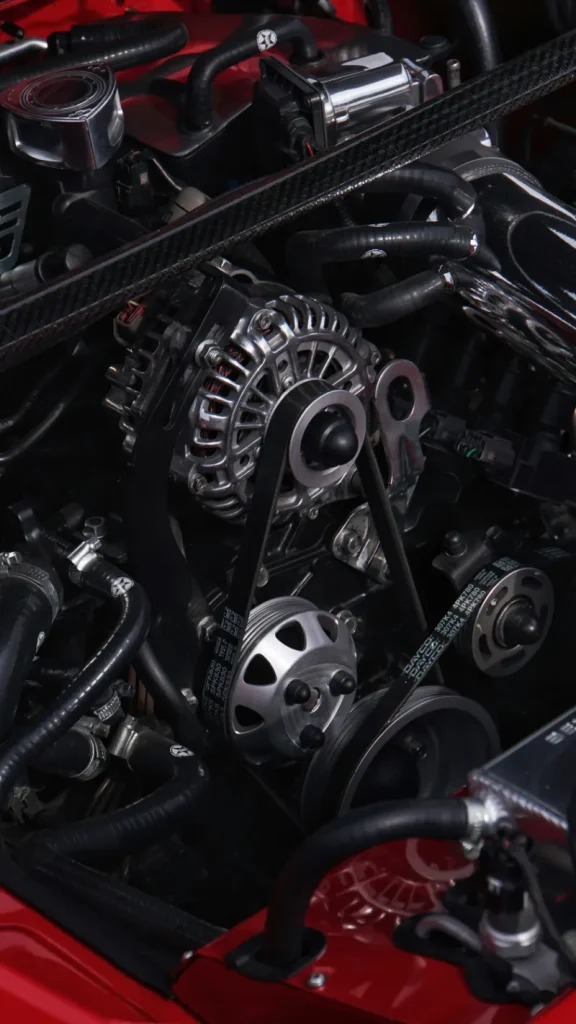
Your engine drives several accessories through belts. On most modern vehicles, a single long serpentine belt loops around a series of pulleys and turns your alternator, power steering pump, water pump, and air conditioning compressor. That one belt keeps your battery charged, your steering easy, your engine cool, and your AC blowing cold.
Auto belt repair and replacement means inspecting that serpentine belt and its related components, then replacing the belt (and any worn tensioner or idler pulley) before it snaps. This is different from your timing belt, which controls the internal timing of the engine itself. You can read about that separate job on our Timing Belt Repair & Replacement page. This procedure lives under our broader Belt Services category, where we handle every belt-driven system on your vehicle.
When a serpentine belt goes, everything it powers goes with it. That’s why we treat this as a small, routine job worth doing on schedule rather than a roadside emergency worth risking.
When You Need It
Belts wear gradually, then fail suddenly. Here are the concrete signs that it’s time to have yours looked at:
- A squeal or chirp when you start the car, turn the steering wheel, or accelerate
- Visible cracks, glazing, or missing chunks on the ribbed side of the belt
- Your battery light comes on, or the AC suddenly stops blowing cold
- Steering that feels heavier than usual
- You’ve crossed 60,000 to 100,000 miles without a belt replacement
Most serpentine belts are due for replacement somewhere between 60,000 and 100,000 miles, though the North Carolina heat and humidity around Youngsville can shorten that. On an SUV with 90,000 miles that you rely on every single day, this is exactly the kind of preventive check worth doing before a road trip. If you’re seeing a warning light you don’t understand, our battery keeps dying guide may point you here, since a slipping belt can starve your alternator.
What’s Involved: The Process
We believe you should know exactly what you’re paying for, so here’s what actually happens when your car is in our bay:
Inspection first. Before we quote you anything, we open the hood and physically examine the belt. We look at the ribbed surface for cracks and glazing, check the belt’s tension, and spin the tensioner and idler pulleys by hand to feel for roughness or play. We’ll show you what we find.
A clear explanation and price. If the belt needs replacing, we tell you the price before we begin. No surprise bill, no scary list of add-ons you never asked about. If the belt is fine and the noise is coming from a pulley or tensioner instead, we tell you that too.
The replacement. We relieve tension on the automatic tensioner, route the old belt off the pulleys, and note the exact routing path. We install a new belt of the correct length and rib count, seat it properly on every pulley, and restore tension. If a tensioner or idler pulley is worn, we recommend replacing it at the same time, because a bad pulley will chew through a new belt.
Verification. We start the engine, listen for noise, and confirm the belt tracks straight and quiet. Then you drive away without that chirp.
How It Fits Into Belt Services
Serpentine belt work is one piece of the complete Belt Services we offer. The other major piece is your timing belt, which is a more involved job because it sits deeper in the engine and, on many engines, a failure can cause serious internal damage. Knowing which belt you’re dealing with matters, and we’ll always tell you plainly which one your car has and what it needs.
Because your serpentine belt drives the water pump and cooling components on many engines, this work often overlaps with our Heating & Cooling services and our broader Scheduled Maintenance. When you bring your car in for a belt, we look at the whole picture and tell you what actually needs attention now versus what can wait.
What We Check
A belt is only as good as the parts that drive it. During your inspection, our technician checks each of these:
- The belt ribs for cracking, glazing, fraying, or missing material
- Belt tension and whether the automatic tensioner still holds it correctly
- The idler and tensioner pulleys for bearing noise, wobble, or seizing
- Pulley alignment, since a misaligned belt wears fast and squeals
- Signs of oil or coolant contamination that can degrade the belt early
Our owner, Michael Grueneich, holds a Degree in Automotive Repair from Wake Technical Community College, and that training shows in the small things, like catching a failing pulley bearing before it takes out a brand-new belt. You can meet him on our team page.
Why It Matters
Here’s the part that should give you peace of mind, not more anxiety. A serpentine belt replacement is one of the least expensive ways to prevent one of the most inconvenient breakdowns. When a belt snaps while you’re driving, you lose your alternator, power steering, and often your engine cooling all at once. That can mean a dead battery, a wheel that’s suddenly hard to turn, and an engine that overheats within minutes.
Picture that happening on the highway with your kids in the back seat. That’s the scenario worth spending a little now to avoid. Replacing a worn belt on your schedule, in our shop, on a weekday you planned for, beats a tow and a ruined afternoon every time.
And you won’t be talked down to or rushed into extras here. If your belt has plenty of life left, we’ll say so and send you on your way. That’s what caring for people and their vehicles actually looks like.
Service Areas We Serve
Drivers come to us from all across Franklin County and northern Wake County. We proudly serve Youngsville, Franklinton, Grissom, Wake Forest, New Light, and Katesville. See our full service area map for details.
Bring Your Car In Before That Squeal Turns Into a Tow
If you’ve been hearing that chirp and quietly hoping it goes away, let us take a look and give you a straight answer. We’ll show you the belt, explain what we see in plain English, and tell you the price before we do a thing. No pressure, no upsell, no talking over your head.
Call Providence Auto Care at 919-556-4488 or visit us at 2862-B State Rd 1116, Youngsville, NC 27596. You can also request a free quote online, and we’ll help you get that belt sorted so you can stop dreading every start-up.