
That One Repair Everyone Warns You About
Somebody mentioned your timing belt. Maybe the dealership, maybe your dad, maybe a quick Google search that sent you down a rabbit hole at 11pm. And now you’re worried, because everything you read says that if this belt snaps, it can wreck your whole engine. That’s a scary sentence to read when you don’t know cars and your SUV already has 90,000 miles on it.
Take a breath. You’re not behind, and you’re not being foolish for asking. A timing belt is one of those maintenance items that’s easy to overlook precisely because it doesn’t make noise or flash a light until it’s too late. The good news is it’s completely predictable. When you know your vehicle and its mileage, we can tell you honestly whether you need this now, soon, or not for a while — no scare tactics, no guessing.
This page walks you through exactly what a timing belt job involves, so when you drop your car off you’ll know what you’re paying for. It’s one part of our broader belt services at Providence Auto Care.
What Timing Belt Repair & Replacement Is
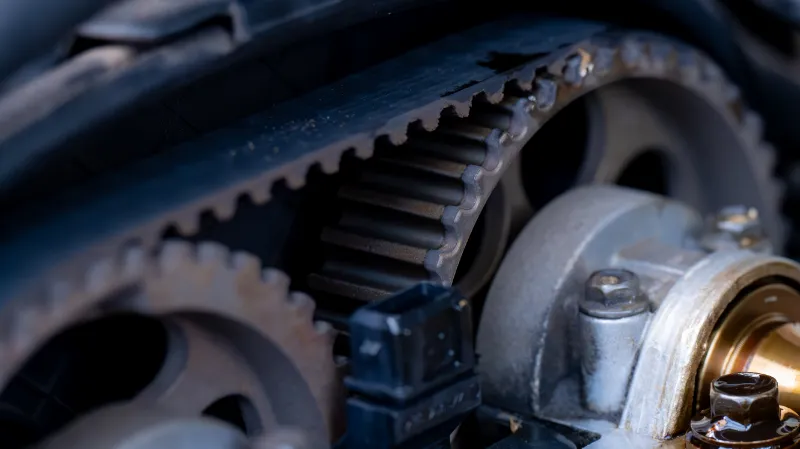
Your timing belt is a reinforced rubber belt with teeth on the inside. It keeps the top half of your engine (the camshaft, which opens and closes the valves) spinning in perfect sync with the bottom half (the crankshaft, which drives the pistons). If those two halves fall out of sync, the timing that makes an engine run is gone.
Timing belt replacement means removing that worn belt and installing a new one, set to the exact factory timing marks. Because reaching the belt requires taking apart the front of the engine, we almost always replace the tensioner and idler pulleys at the same time, and often the water pump if it’s driven by the same belt. Doing it all together is what keeps you from paying twice for the same labor.
Not every vehicle has a timing belt. Many newer engines use a timing chain instead, which is designed to last much longer. Part of our job is confirming which one your car has before we quote you a thing — because nobody should pay for a service their engine doesn’t even use.
When You Need It
Timing belts are replaced on a mileage schedule, not when they break. That’s the whole point — you change it before it fails. Most manufacturers call for replacement somewhere between 60,000 and 105,000 miles. Your owner’s manual lists the exact interval, and we’ll look it up for you if you’re not sure.
You should have your timing belt checked or replaced if:
- Your mileage is approaching or past the interval in your owner’s manual
- You bought the vehicle used and have no record it was ever done
- You hear a ticking or slapping noise from the front of the engine
- You notice oil leaking near the timing cover, which can degrade the belt
- The engine is hard to start or runs rough, which can signal timing that’s begun to slip
If you’re not sure where your car stands, that’s exactly the kind of question we welcome. A pre-purchase vehicle inspection is one common way this comes up — we check timing belt history before you buy a used vehicle so it doesn’t become your problem three months later.
What’s Involved: The Process
Here’s what actually happens when your car is with us for a timing belt, so there are no surprises and no mystery on the invoice.
Confirming the job. We verify your engine uses a timing belt (not a chain), look up the factory interval, and inspect for oil leaks or other issues that would affect the repair. Then we give you the price before we start.
Accessing the belt. We remove the accessory belts, engine mounts where needed, covers, and pulleys blocking the way. This is where most of the labor lives — the belt itself is inexpensive; reaching it is the work.
Setting the timing marks. We rotate the engine to line up the factory timing marks on the crankshaft and camshaft. This alignment has to be exact. A tooth off in either direction and the engine won’t run right.
Replacing the wear parts. We install the new belt along with the tensioner and idler pulleys, and the water pump when it’s driven by the timing belt. These parts wear on the same clock, so replacing them together saves you a second labor bill down the road.
Reassembly and verification. We reinstall everything, double-check the timing marks, then start the engine and confirm it runs smoothly and holds proper timing before it leaves the shop.
How It Fits Into Our Belt Services
Timing belt work is one piece of the full belt services we offer. The other major belt on your engine is the serpentine belt, which drives your alternator, power steering, and AC — that’s covered under our auto belt repair & replacement service. People mix these two up all the time, and that’s fine; part of our job is telling you which one you actually need.
Because the water pump often rides on the timing belt, this job frequently overlaps with our water pump replacement work. When both are due, we handle them in one visit so you’re not paying to open the same part of the engine twice. We’ll always show you the math on that decision rather than just adding it to the bill.
Signs Your Timing Belt Is Wearing Out
A timing belt often gives little warning, which is why the mileage schedule matters. But when there are symptoms, these are what a technician looks for:
- A high-pitched ticking or clicking from the front of the engine
- Engine that cranks but won’t start, which can mean a snapped belt
- Rough idling or misfires as timing begins to drift
- Visible cracks, glazing, or missing teeth on the belt during inspection
- Oil or coolant seepage near the timing cover
If your car cranks but won’t start, don’t keep turning the key — you could be looking at a car that won’t start because of a failed belt, and continued cranking can make engine damage worse. Call us and let us take a look first.
Why It Matters
Here’s the honest version, without the scare tactics. Many engines are what’s called “interference” designs. In those engines, if the timing belt breaks while you’re driving, the valves and pistons collide, and you’re looking at bent valves or worse — a repair that can cost more than the belt job many times over. In non-interference engines the car simply stops, which is safer but still leaves you stranded.
Neither scenario is one you want with your kids in the back seat on the highway. And a belt never fails at a convenient time. Replacing it on schedule is genuinely one of the smartest, most cost-effective things you can do for an aging vehicle — you’re spending a predictable amount now to avoid an unpredictable, much larger amount later. That’s not an upsell. That’s the math.
We’ll tell you the truth about where your belt stands. If it has miles left, we’ll say so. If it’s due, we’ll explain why and give you the price before we begin. No pressure, no rushing you into a decision in the waiting room.
Service Areas We Serve
Providence Auto Care handles timing belt replacement for drivers across the region, including Youngsville, Franklinton, Grissom, Wake Forest, New Light, and Katesville. Wherever you’re driving from, you’ll get the same straight answers and clear pricing.
Talk to Us Before Your Belt Becomes a Problem
If your vehicle is near its timing belt interval, or you just want to know where you stand, let’s have a plain conversation about it. We’ll check your mileage, confirm what your engine actually uses, and give you an honest recommendation and a price up front. No surprise bills, no talking down to you.
Call Providence Auto Care at 919-556-4488 or stop by the shop at 2862-B State Rd 1116, Youngsville, NC 27596. You can also contact us to schedule and get your questions answered before you commit to anything. Caring for people and their vehicles is what we do — and that starts with treating you like someone smart enough to make your own call once you have the facts.