When the Pedal Feels Wrong and Your Stomach Drops
You pressed the clutch this morning and something felt off. Maybe it went soft. Maybe the engine revved but the car didn’t pull like it should. Maybe you caught a whiff of something hot and burnt at a stoplight. Now there’s that familiar knot in your stomach, and the little voice asking how much this is going to cost and whether the shop is going to be straight with you.
You depend on this car. School pickups, work, the errands that never end. The idea of it dying somewhere with your kids in the back seat is exactly the thing you don’t want to think about. So let’s take the mystery out of it. A clutch replacement is a defined, well-understood job, and when it’s done right you get years of smooth, reliable shifting back. Here’s exactly what it involves and how we handle it.
What Clutch Replacement Actually Is
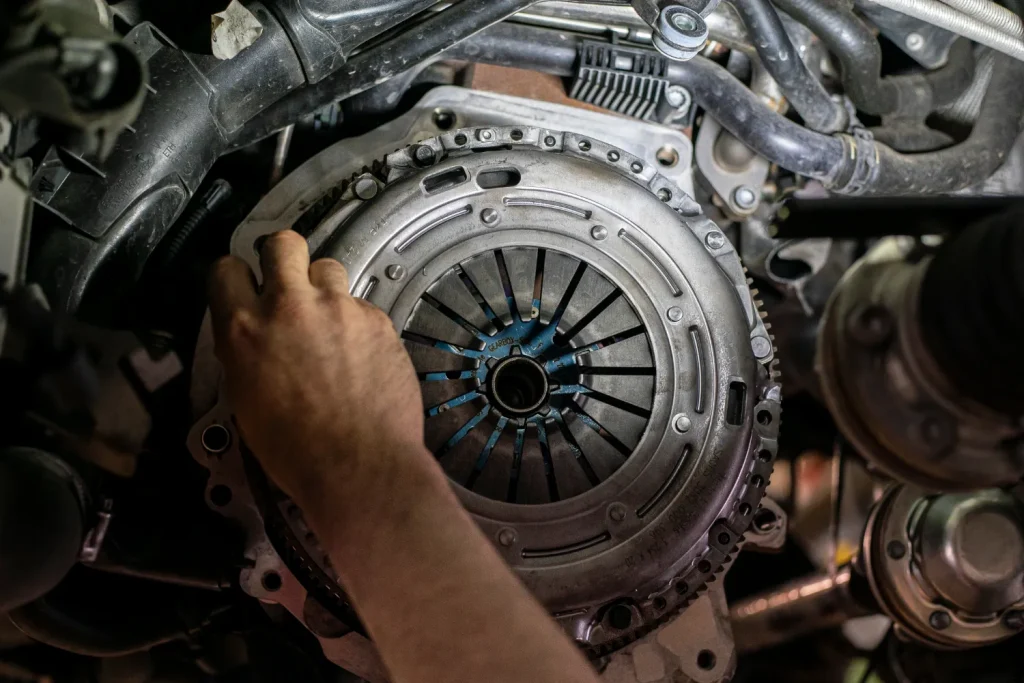
Your clutch is the link between your engine and your transmission. Every time you press the pedal, you’re separating the two so you can shift gears without grinding. That link wears out. A clutch replacement means removing the worn friction components and installing new ones so the connection grips firmly again.
On most vehicles that means replacing the clutch disc, the pressure plate, and the throw-out (release) bearing as a matched set. We also inspect the flywheel, which the disc presses against, and resurface or replace it if it’s scored or heat-damaged. Doing these parts together is not upselling. It’s how the job is meant to be done, because mixing a new disc with a worn pressure plate or a glazed flywheel guarantees you’re back in the shop early.
Clutch replacement is one procedure within our broader clutch services. If you’re not certain a full replacement is even needed yet, that’s fine. We start with an honest look before we recommend anything major.
When You Need a Clutch Replacement
A clutch doesn’t fail on a fixed schedule the way an oil change comes due. It depends on how the car is driven and how much stop-and-go traffic it sees. Many clutches last well past 100,000 miles; some wear out sooner. The triggers that tell you it’s time are usually clear once you know what to feel for:
- The engine revs higher but the car speeds up slower than it should, especially going uphill or merging
- A burning smell, like scorched paper, after climbing a hill or during heavy traffic
- The clutch pedal feels spongy, sticks near the floor, or grabs way up high
- Difficulty getting into gear, or a grinding when you shift
- A shudder or chatter as you let the pedal out from a stop
The first symptom, slipping, is the classic sign of a worn-out clutch disc. If you’re noticing it, read more on clutch slipping. A shudder points toward clutch chatter, which sometimes means the clutch, sometimes the flywheel. Either way, we confirm the cause before quoting a replacement, because not every clutch symptom means you need the whole assembly replaced.
What’s Involved in the Process
Replacing a clutch is a labor-intensive job because the clutch sits between the engine and transmission, and the transmission has to come out to reach it. Here’s what we actually do, so you know exactly what you’re paying for:
Diagnosis first. Before any parts come off, we confirm the clutch is the real problem through a clutch diagnosis. That protects you from paying for a full replacement when the issue might be a hydraulic component or a simple adjustment.
Transmission removal. We support the engine, disconnect the driveshaft or axles, linkage, and electrical connectors, then carefully lower the transmission away from the engine to expose the clutch assembly.
Inspection and part replacement. We remove the old pressure plate and disc and inspect the flywheel, the input shaft, and the seals. The disc, pressure plate, and release bearing go in as a new matched set. We look at the pilot bearing and replace it while access is easy, since it’s cheap now and expensive later.
Flywheel service. If the flywheel is scored or heat-checked, we recommend flywheel resurfacing or replacement so the new disc has a clean, flat surface to grip.
Reassembly and testing. We reinstall the transmission, reconnect everything, bleed the hydraulic system if equipped, and road test the car to confirm smooth engagement and clean shifts. You get it back shifting the way it did when it was new.
Because the transmission is already out, this is also the smart time to address a leaking rear main seal or a worn hydraulic component, if we find one. We’ll tell you what we see and let you decide. No pressure, no scary list handed over at the last minute.
How It Fits Into Our Clutch Services
Clutch replacement is the deep-repair end of our full clutch services. Many customers arrive worried they need a whole new clutch when the real fix is simpler and far less expensive.
Sometimes the trouble is in the hydraulic system that operates the clutch, not the clutch itself. A failing clutch master cylinder or clutch slave cylinder can make the pedal feel soft or drop to the floor while the clutch disc itself is fine. If that’s the case, we handle it as a hydraulic clutch repair and you keep your money for other things. We only recommend full replacement when the friction components are genuinely worn out.
What We Check During the Job
A clutch replacement is a chance to inspect everything in that area while we already have access. During the procedure we examine and report on:
- The clutch disc friction material and any signs of overheating or contamination from oil
- The pressure plate fingers and diaphragm spring for wear or bluing from heat
- The flywheel surface for scoring, warping, and hot spots
- The rear main seal and transmission input seal for leaks that could ruin a new disc
- The release bearing, pilot bearing, and clutch fork for play or wear
- The hydraulic lines and cylinders, or the cable and linkage, depending on your vehicle
We show you the old parts if you want to see them. It’s your car and your money, and you deserve to understand why a part is being replaced. This is what a shop that treats you like a person, not a target, looks like.
Why Clutch Replacement Matters
Driving on a failing clutch doesn’t just get more expensive over time. It gets less safe. A slipping clutch can leave you unable to accelerate away from a hazard, and a clutch that grabs unpredictably makes the car harder to control in traffic. The last thing you want is to lose drive on an on-ramp with your kids in the car.
There’s a financial reason to act sooner, too. A worn disc that keeps slipping generates heat, and that heat can warp the flywheel and cook the pressure plate. Catch it early and you may need only the clutch set. Let it go and you can turn a manageable repair into a flywheel replacement on top of it. Owner Michael Grueneich holds a Degree in Automotive Repair from Wake Technical Community College, and the whole point of our diagnosis-first approach is to catch problems while they’re still small.
Done properly, a clutch replacement resets the clock. You get crisp shifting, a firm pedal, and the quiet confidence of driving a car you trust again. That peace of mind, knowing your family’s daily driver is safe and predictable, is the real result you’re paying for.
Service Areas We Serve
From our shop in Youngsville, NC, we handle clutch replacement for drivers across the area, including Franklinton, Grissom, Wake Forest, New Light, and Katesville. See every community we cover on our areas we serve page.
Bring Us Your Clutch Concern
If the pedal feels wrong, if you’re smelling that burnt odor, or if the engine is racing while the car drags its feet, let’s take a look before it turns into something bigger. We’ll explain what we find in plain language, give you a clear price before we start, and tell you honestly whether you need a full replacement or something simpler.
Call Providence Auto Care at 919-556-4488 or stop by the shop at 2862-B State Rd 1116, Youngsville, NC 27596. You can also contact us to get a free quote. We’d be glad to care for you and your vehicle.