That Sinking Clutch Pedal Isn’t in Your Head
You press the clutch and it feels different. Mushy. Like it sank a little too easily and didn’t push back the way it used to. Maybe first gear grinds when it never used to, or the pedal stays flat on the floor for a beat before it lazily rises back up. You’re not imagining it, and you’re not being dramatic.
Here’s the part that matters: a failing clutch slave cylinder rarely fixes itself, and it tends to get worse at the worst possible time — like at a stop sign with your kids in the back seat and traffic building behind you. The good news is that this is a well-understood, fixable part, and knowing what it is puts you back in control of the conversation instead of nodding along to a repair order you don’t understand.
What a Clutch Slave Cylinder Actually Is
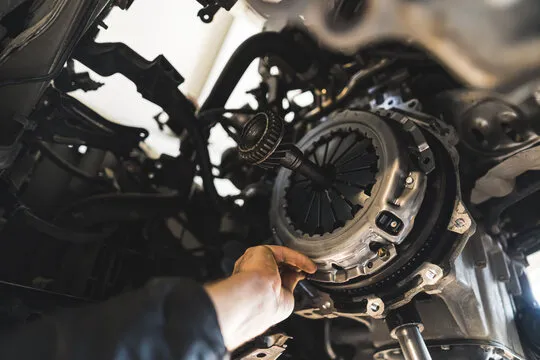
Your clutch is hydraulic, which just means it uses fluid pressure to do its job instead of a cable. When you push the pedal, the clutch master cylinder pushes brake fluid through a line. That fluid travels to the slave cylinder, which sits on or near the transmission. The slave cylinder takes that fluid pressure and physically pushes a rod (or a release bearing) to disengage the clutch so you can shift gears.
Think of it as the last link in a chain. The master cylinder gives the command; the slave cylinder does the muscle work. When the seals inside the slave cylinder wear out, fluid leaks past them instead of pushing the rod. That’s why the pedal feels soft — the pressure is escaping instead of moving the clutch. This repair is one specific piece of our broader clutch services, and it’s closely tied to the hydraulic system as a whole.
When You Need Clutch Slave Cylinder Service
Slave cylinders don’t wear on a set mileage schedule the way brake pads or oil do. They fail based on age, heat, and the condition of the fluid moving through them. That said, there are concrete signs that bring most drivers into the shop:
- The clutch pedal feels soft, spongy, or sinks to the floor without much resistance
- The pedal is slow to return to its resting position after you lift your foot
- Gears grind or resist when you try to shift, especially into first or reverse
- You spot a small puddle or damp spot near the transmission or under the pedal area
- The clutch fluid reservoir keeps dropping and you can’t figure out where it’s going
If any of these sound familiar, don’t wait it out. A slave cylinder that’s slowly leaking can go from mildly annoying to leaving you stranded — because once it can’t build pressure at all, the clutch won’t disengage and the car won’t shift. If you’re already noticing that your gears feel unpredictable, that’s your cue to have it looked at.
What’s Involved in the Repair
We don’t guess, and we don’t replace parts just to see if it helps. Here’s exactly what happens when you bring your vehicle in for a suspected slave cylinder problem, so there are no surprises on the invoice.
Confirm the diagnosis. We start with a hands-on inspection of the whole hydraulic path — pedal feel, fluid level, and a check for leaks at both the master and slave cylinders. A soft pedal can come from either end, so we verify which part is actually failing before we quote a repair. That’s the difference between fixing the problem and just swapping parts.
Access the cylinder. Some slave cylinders bolt to the outside of the transmission and are reachable in the engine bay. Others are internal — mounted inside the bell housing as part of the release bearing — which means the transmission has to come down to reach them. We tell you upfront which type your vehicle has, because that determines the labor involved and we want you to see the full picture before deciding.
Replace and bleed. We install the new slave cylinder, then bleed the hydraulic line to remove every air bubble. Air in the line causes the same soft-pedal symptom as a bad cylinder, so a proper bleed is not optional — it’s what makes the repair actually hold. We top off with the correct fluid and test the pedal through its full travel.
Road test. We shift through the gears, feel for clean engagement, and confirm the pedal returns crisply before we hand your keys back. You leave knowing it was verified, not just installed.
How This Fits Into Your Clutch System
The slave cylinder never works alone. It’s one half of the hydraulic pair, and its partner is the clutch master cylinder at the pedal end. When one leaks, the other is often the same age and not far behind, which is why we inspect both together during any hydraulic clutch repair.
If your diagnosis turns up more than a hydraulic issue — say the clutch disc itself is worn — we’ll walk you through whether a full clutch replacement makes more sense while the transmission is already accessible. And if you’re not sure what’s wrong yet, our clutch diagnosis pins it down before any parts get ordered. The point is you get one honest recommendation, not a menu of scary maybes.
What We Check During the Job
Because the hydraulic clutch system shares fluid and pressure across several parts, a good slave cylinder job includes checking the neighbors. Here’s what we look at while we’re in there:
- The clutch master cylinder for leaks or a spongy feel of its own
- The hydraulic line and fittings for cracks, corrosion, or seeping connections
- The condition and level of the clutch fluid — dark, dirty fluid tells a story
- The release bearing and clutch fork for wear, especially on internal-slave setups
- Pedal travel and free play to confirm the whole system engages correctly
If something else needs attention, we show you and explain what can wait versus what shouldn’t. You decide with full information. No pressure, no upsell list waved in your face while you’re trying to get back to work.
Why This Repair Matters
A slave cylinder is a small part, but ignoring it has an outsized cost. As the leak worsens, the clutch stops fully disengaging. That means the clutch disc keeps making partial contact even when the pedal is down, which grinds gears and wears the clutch itself faster than normal. What started as an inexpensive hydraulic fix can turn into a much larger clutch job if it’s left alone long enough.
Then there’s the safety piece. A clutch that won’t disengage can strand you mid-drive — and if it fails while you’re merging or pulling out of a parking lot with your family aboard, that’s a situation no one wants. Fixing the slave cylinder while it’s still a straightforward repair keeps your car predictable and keeps that low-grade worry off your plate. You should be able to drive to school pickup without listening for noises.
We’ve been caring for people and their vehicles here since 2014, and Michael’s degree in Automotive Repair from Wake Technical Community College means the diagnosis is done right the first time. You get a real explanation of what’s wrong, what it costs, and what your options are — before we start.
Service Areas We Serve
Our shop is based in Youngsville, NC, and drivers come to us from across Franklin County and the surrounding area, including Franklinton, Wake Forest, Grissom, New Light, and Katesville. If your clutch pedal has gone soft, we’re a short drive away.
Bring Your Clutch In and Get a Straight Answer
If the pedal feels wrong, don’t keep turning up the radio and hoping. Let us look at it, tell you plainly what’s happening, and give you an honest price before we start. No lectures, no scare tactics — just a clear next step from a shop that treats you like a person.
Call Providence Auto Care at 919-556-4488 or stop by 2862-B State Rd 1116, Youngsville, NC 27596. You can also request a free quote online and we’ll get right back to you. Caring for people and their vehicles — that’s the whole job.