That Sinking Feeling When the Engine Roars but the Car Barely Moves
You press the gas to merge, the tachometer climbs, the engine gets louder — and the car just doesn’t go the way it used to. Maybe you caught a faint burning smell in the school pickup line. Maybe first gear feels fine but the car seems to hesitate in third or fourth. Your stomach drops a little, because you don’t know cars, and you already suspect this is going to be expensive.
Take a breath. A slipping clutch is a real problem, but it is a known problem with a clear diagnosis. You don’t have to guess, and you don’t have to hand your keys to someone who talks over your head or hands you a scary list of repairs. At Providence Auto Care, we tell you in plain English what’s actually happening and what it will take to fix it — before we touch your car.
What Clutch Slipping Actually Is
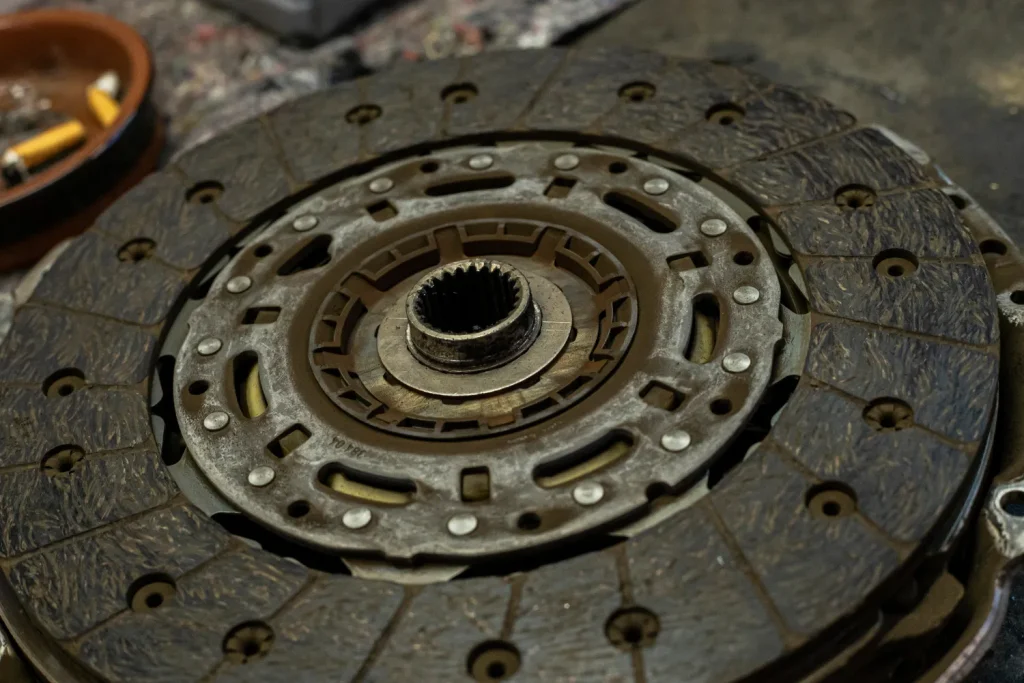
In a manual transmission, the clutch is what connects your engine’s power to your wheels. When you let the clutch pedal out, a spring-loaded pressure plate clamps the clutch disc against the engine’s flywheel. That friction is what makes the car move. Over time, the friction material on the clutch disc wears down, much like brake pads do.
Clutch slipping happens when that worn disc can no longer grip the flywheel tightly enough. The engine spins faster than the wheels do, so power “slips” instead of transferring. The result is that telltale mismatch: high RPMs, low acceleration, and sometimes a hot, acrid smell from the friction burning. This diagnosis is one specific part of our broader clutch services here in Youngsville.
When You Need Clutch Slipping Diagnosed
Slipping rarely happens all at once. It usually creeps in, which is exactly why so many drivers ignore it until it strands them. Bring your vehicle in if you notice any of these:
- Engine RPMs climb but the car doesn’t accelerate to match, especially on hills or when merging
- A burning smell, like scorched carpet or brake dust, after climbing a grade or towing
- The clutch “grabs” very high in the pedal travel, near the top
- Difficulty accelerating in higher gears even though lower gears feel normal
- A sudden jump in engine RPM when you accelerate without shifting
If you’re also feeling a shudder when you engage the clutch, that’s a related but different issue — see our page on clutch chatter. And if the car feels like it’s losing power in general, our guide on loss of power while driving can help you sort out what’s what before you come in.
What’s Involved: How We Diagnose a Slipping Clutch
Here’s exactly what we do, so there are no surprises. We don’t believe in tearing your transmission apart before we’ve confirmed the problem.
We talk to you first. When did the slipping start? Does it happen cold or warm? On hills or flat ground? Your answers narrow the problem down fast and often save you money on diagnostic time.
We road test and stall test. A technician drives the vehicle to feel where and when the slip occurs. In the shop, a controlled engagement test confirms whether the disc is actually slipping under load versus another driveline issue mimicking the symptom.
We check the hydraulic system. Sometimes what feels like a worn disc is actually a hydraulic problem keeping the clutch from fully engaging. We inspect the clutch master cylinder and clutch slave cylinder for leaks and pressure loss. This is part of our hydraulic clutch repair work, and catching it here can save you from an unnecessary clutch replacement.
We explain your options. Once we know what’s causing the slip, we call you with a plain-language explanation and an upfront price. You decide. We never start work you didn’t approve.
How This Fits Into Our Clutch Services
Diagnosing a slipping clutch is the front door to our full range of clutch services. A slip diagnosis often overlaps with a formal clutch diagnosis, where we pinpoint the exact failing component rather than replacing parts on a hunch.
If the friction disc is worn beyond service, the fix is usually a clutch replacement — which we handle with quality parts and a resurfaced or replaced flywheel so the new clutch grips cleanly. If the problem turns out to be hydraulic instead of mechanical, we repair only what’s actually failing. The point is that “clutch slipping” isn’t automatically an expensive job until we’ve confirmed why it’s happening.
What We Check During the Inspection
When you bring your car in for slipping, our technician looks at the whole clutch system, not just the disc, so you don’t pay twice for a problem we missed the first time:
- Clutch disc friction material thickness and wear pattern
- Pressure plate condition and clamping force
- Flywheel surface for heat cracks, glazing, or scoring
- Hydraulic master and slave cylinders for leaks and proper travel
- Clutch cable adjustment on cable-actuated systems
- Any oil contamination from a leaking rear main or transmission seal
That last one matters. A slipping clutch is sometimes caused by an oil leak soaking the friction disc — replacing the clutch without fixing the leak just guarantees you’ll be back in a few months. We look for the root cause.
Why It Matters to Fix a Slipping Clutch Now
A clutch that slips doesn’t heal itself, and driving on it makes the repair more expensive. The heat from slipping can warp the flywheel and damage the pressure plate — parts you could have kept if you’d caught it early. What might have been a straightforward disc replacement can turn into a flywheel and hydraulic job too.
There’s also the safety side. A clutch that finally lets go can leave you stranded, and it tends to happen at the worst moment — pulling out into traffic, climbing a ramp, hauling your kids to a game. For a busy parent who depends on one vehicle to keep the whole week running, that’s not a risk worth taking. Catching a slip early keeps you in control of the timing and the cost, instead of the car making the decision for you on the side of Highway 1.
We’ll always tell you honestly whether this needs attention today or whether it’s safe to keep an eye on for a little while. That’s the whole point of getting a straight answer from someone you trust.
Service Areas We Serve
Providence Auto Care is proud to help drivers with clutch slipping and full clutch repair across the region. We serve Youngsville, NC, Franklinton, NC, Grissom, NC, Wake Forest, NC, New Light, NC, and Katesville, NC. See all the areas we serve for more.
Get an Honest Answer About Your Clutch
You don’t have to keep turning the radio up to drown out the worry. Bring your car to a shop that will explain what’s really going on, give you an upfront price, and never push you into work you don’t need. That’s how we’ve cared for people and their vehicles since 2014.
Call Providence Auto Care at 919-556-4488 to schedule your clutch inspection, or stop by the shop at 2862-B State Rd 1116, Youngsville, NC 27596. You can also contact us online and we’ll get right back to you.